In 1988, I had the privilege of studying abroad at a university in Poznan, Poland. One of my courses was a sociology class where I was asked to write and discuss essays of cultural nuances I experienced. I will share about some of those experiences on this blog.
One particular story started with a conversation in our dorm hallway. A friend and I were talking about some of the challenges she and her fellow students faced in their daily life under the communist regime. She explained how they had no sense of attachment to anything related to the regime because it didn’t feel authentic to their country.
I asked what she meant by that, so she gave me an example. She told me the Polish flag was meaningless to her because it wasn’t the original or authentic flag of her country. It didn’t have the traditional eagle of her Polish heritage. The current flag was merely a symbol of an inauthentic regime.
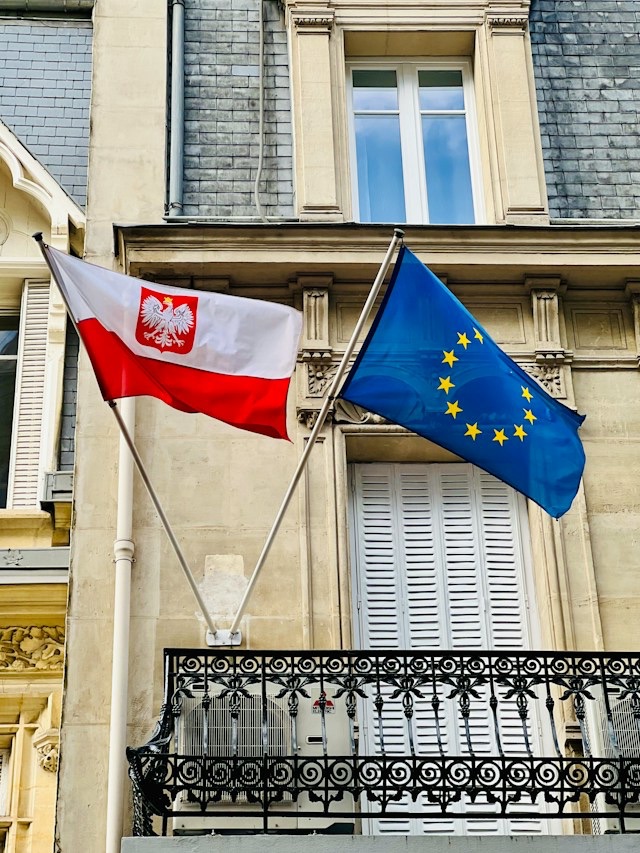
I told her I didn’t make a big deal out of flags either. They were abstract symbols I couldn’t relate to.
She smiled and nodded in a way that showed me she was unconvinced.
“I’ll show you,” she said and disappeared into my dorm room. She came back carrying a small American flag someone had given me.
She held the flag up and looked like she was going to rip it apart. I gasped and said, “Don’t!”
She nodded. “I thought so. This flag means more to you than you realize.”
Until that moment, I wasn’t aware of how much respect and appreciation I had for the American flag. When I thought she was going to tear it up, something inside me strongly objected. That’s when I realized the flag was more than a symbol. It represented a way of life that was very important to me.
She said, “I don’t feel that way about our current Polish flag. You can tear it up or throw it on the ground and stomp it. It means nothing to me because it doesn’t represent our Polish heritage. It’s just a symbol of a regime that isn’t really Polish.”
I nodded slowly. My mind could understand what she was saying. But I didn’t have the lived experience of what she was feeling. I had never lived under a regime that had stolen my heritage.
Our friendship was solid and based on commonalities as young college women who shared some of the same interests and had somewhat similar personalities. But our flag conversation made me aware of the gap in our lived experiences. I could have all the sympathy in the world for her situation. But I couldn’t relate on an experiential level. I didn’t know what it felt like to go through what she and her fellow students and family went through every day.
When you travel overseas, don’t be surprised if you start to appreciate things back home that matter more than you’ve realized. And while you may know some details about local situations abroad, remember you don’t really know what others are experiencing. Be willing to listen and give them grace. That makes for richer interactions and deeper friendships.
 Exploring Generations