In the spring of 1988, I arrived in Poznan, Poland for a semester abroad. I had participated in an eight-week summer program in Poznan, but I wanted to move beyond the structured program designed for foreign students. I wanted a real semester-abroad experience, to know what everyday student life felt like: attending classes at the university, learning alongside Polish students.
This was the spring semester of my senior year at University of Florida. That means I had to fulfill my remaining graduation requirements in Poland. I was enrolled in several language courses. No political science classes were available for my major, so my advisors created an independent thesis study, where I researched and wrote about Polish environmental politics. To fulfill my one remaining course requirement, my advisors decided a sociology class would be appropriate.
The Student Class Experience
I was very excited to join the sociology course and get a real glimpse of what my Polish student friends experienced in the classroom. They all sat in a circle with the professor leading. I sat next to my Polish friend who was fluent in English, so she could explain what was going on. My Polish wasn’t very strong yet. I loved seeing the rhythm of the class, the discussions, the kinds of questions students were asking. That was the exact experience I had wanted; it was why I had returned for the semester.
However, after a few class sessions, I realized my language ability was not strong enough to keep up. The lectures and professor’s answers to questions moved too quickly. While I had enjoyed the experience, I knew I would never graduate if I had to depend on a grade in that class.
The Private Student Option
I spoke with my advisors, who consulted with the Polish university department that was hosting me. They came up with a unique arrangement for me. It would check everyone’s boxes and give me a new perspective on Polish academics.
They told me about a sociology professor at a university on the other side of the city. He spoke some English. The Solidarity movement was the focus of his research, and he had developed some new theories. This professor had been looking for an audience to help him articulate his ideas. He welcomed the opportunity to present his research in English to an American. I became his private student.
Journey to the City Center
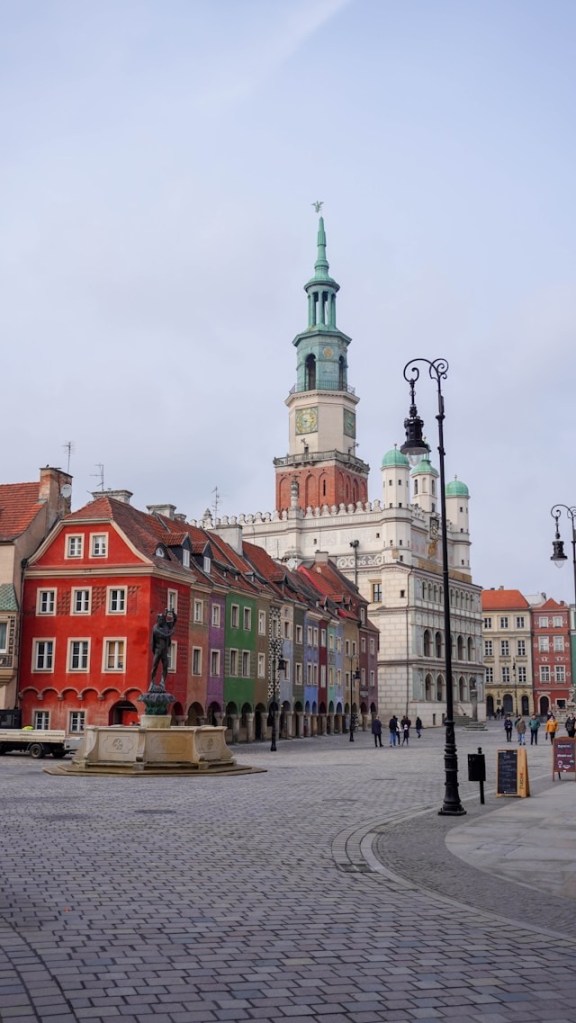
When the day arrived for my first meeting with this sociology professor, I boarded several trams to carry me across the snow-covered streets of the city. His university was located downtown in a tall building. The Polish university where I lived was at the edge of town and had more of a quieter campus feel.
I felt like this was more than a class to fulfill my graduation requirements. I had already been accepted to graduate school at Boston University, so I knew I would be moving from suburban Florida to a big, northern city. As I exited the tram and walked on the icy sidewalks to that tall building, I felt like I was taking the first steps into my future.
Coffee and Conversation
A year earlier, at University of Florida, I had taken a class with a visiting lecturer from Poland. She was a PhD student in sociology who was teaching her own theories on Solidarity. Without much background in Polish history, I could at least see the parallels: sociology academics developing theories and ideas about the Solidarity movement. I was ready to listen to this professor who had accepted me as his student.
He welcomed me into his office and invited me to sit in a comfy chair. His desk was off to the side, but in front of me was a small table where I could set my notebook as I faced the large projector screen on the wall. He offered me some coffee with sugar, and proceeded to show slides on the screen as he explained his theories about Solidarity.
I’ll always remember his animated expressions. He was very excited about his theories and discoveries and couldn’t wait to present them. Each week, he came up with new ideas that he wanted to tell me about. I did my best to understand. I’m sure I didn’t grasp the full measure of what he was explaining. I understood enough to ask intelligent questions, which made him even more animated as he proceeded to expand on his ideas.
Sociology and Cultural Observations
The first part of my class each week was to listen to his theories and ask questions. The second part focused on our discussion of the weekly essay I had to write. He was interested in my cultural observations. If you’ve ever lived in a foreign country, you probably know those kinds of observations present themselves pretty frequently. I had plenty of material to write about and discuss with him.
Having to write about those observations for the class was helpful. Instead of getting frustrated by things beyond my control, I was able to reflect on and process those situations because I knew they would end up in an essay and conversation over coffee. That gave me a deeper perspective of the cultural differences and misunderstandings I encountered. I’ll be sharing about some of those topics here on this blog in the near future.
A Moment in Time
In the spring of 1988, we had no idea how quickly and dramatically things would change for Poland in the coming years. No one was sure if the Solidarity movement had a future, or what that future might be. My professor was trying to understand a society that was changing around him. I was learning how to understand a world very different from the one I grew up in.
I often think of that professor and wonder what ever happened to him as the Polish landscape shifted. I wonder if his theories were published. How closely his ideas and predictions matched what actually occurred. I would love to know his thoughts as events in Poland unfolded over the next few years after our meetings. With no way to stay in touch, I will never know those answers. But I often wonder if those events surprised him, or if he saw them coming.
I have lots of memories of that spring semester in the university across town: the snowy tram ride, coffee with sugar, theories of Solidarity, a professor trying to communicate in a language not his own, while I tried to understand my cultural experiences in an environment not my own.
But the memory that hits me most deeply is how that sociology class seemed to open a new door to my future. That class shaped who I was becoming, in ways I couldn’t understand or even see at the time. When I look back at the student I was that spring, she is closer to who I am now than who I was before I went to Poland.
 Exploring Generations