I was reading a story set in Michigan, 1862. When I’m reading history, I often mentally plug my ancestors into the date to get a glimpse into their specific world. My mom’s family lived in Michigan, so I did the math. My great grandmother wasn’t born yet, so I looked up her mother, someone who has just been a name on my family tree: Elizabeth Jonsdotter Lidberg Leif Hyttsten, my great-great grandmother.
Elizabeth would have been 27 at the time of the story I was reading: two years into her marriage with Erick Johan Anderson Hyttsten, a year before their son Andrew’s birth, and still living in Sweden. Twelve years later, her daughter, Emma Louise Hyttsten (my great grandmother, Grandma Lou), would be born in Norway.
When Grandma Lou was around 12, the family moved to Michigan and settled in the Upper Peninsula at Ishpeming. (Grandma Lou also had the last name Erickson at some point; I know names were often changed when immigrants moved to a new country.)
Growing up, I had never been told anything about Grandma Lou’s mother, Elizabeth. She was simply a name on the family tree. When I thought about Grandma Lou coming to the new world at a young age, I had a vague sense of her family bringing her here. But that was the extent of what connected her mother, Elizabeth, to our family line. I hadn’t thought of Elizabeth as a person yet.
As I looked at the sparse information of Elizabeth and her husband Erick on my family tree, a new sense of recognition opened for me. Erick died in Ishpeming in 1910. Elizabeth died in Ishpeming in 1920. As I reflected on that information, they started to become real people to me.
My grandmother, Eunice Delphine LaSenius Washburn, was born in Ishpeming in 1898. So, she knew Elizabeth and Erick, her grandparents, probably very well. She grew up with them nearby. Probably spent time at their home. Swedish-style family dinners (as my grandmother was fond of), childhood memories, time spent together, shared experiences that were not written down but lived. As I reflected on what those interactions might have been like, Elizabeth and Erick were no longer names on a tree. They were part of my grandmother’s life.
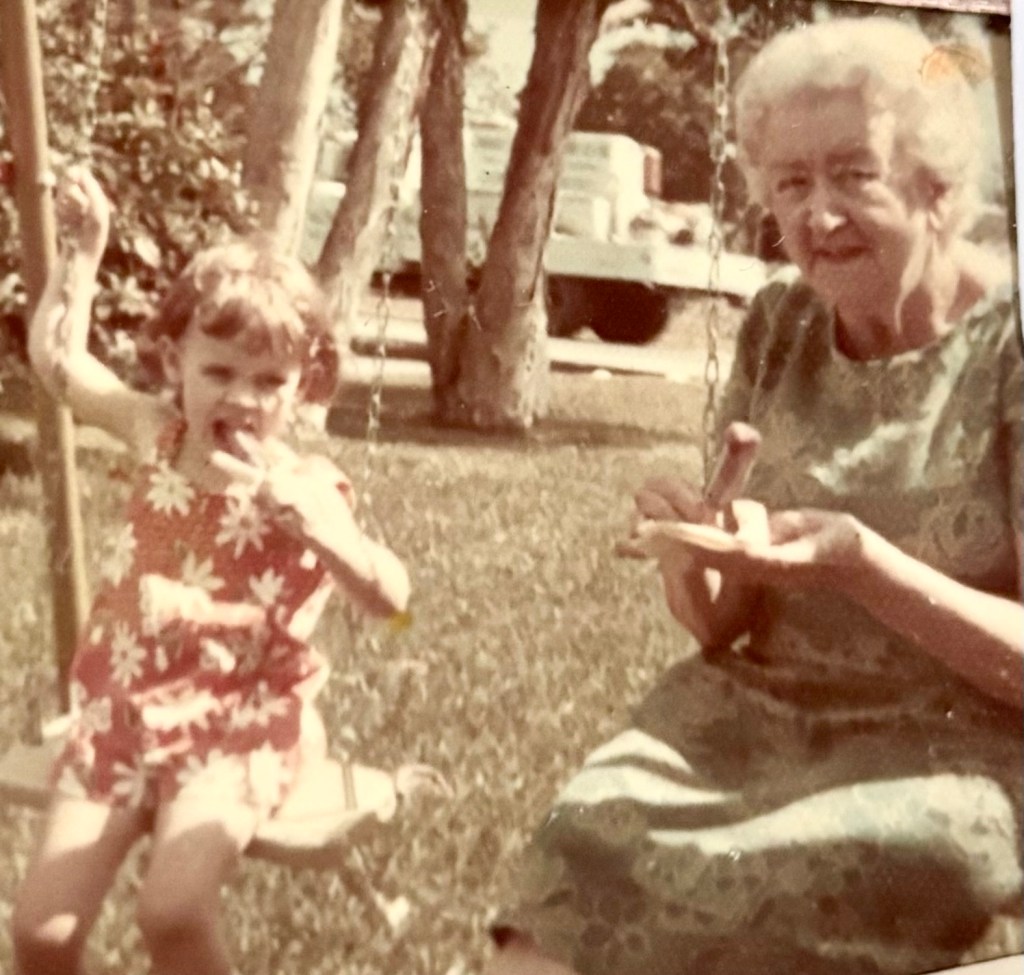
I grew up with my grandmother very active in my life. I knew her well. My mom had the same kind of close relationship with her grandmother, Grandma Lou. There’s no doubt in my mind that my grandmother had the same kind of relationship with Elizabeth. That realization changed Elizabeth from a distant name to part of my grandmother’s everyday life. My sense of family expanded further, embracing another generation. Family history became more than facts on a tree. It became a beautiful tapestry of our connected lives.
I don’t know the year, but at one point, Grandma Lou and her six children moved from Ishpeming to Miami, Florida. Their store in Ishpeming had burned to the ground, and her husband, Franz Emmanuel LaSenius, stayed behind to rebuild.
When Franz died, I’m told everyone in Ishpeming suggested Grandma Lou come back to Michigan. Her reply was repeated often to me as a child growing up in Miami: “I’ve found heaven on earth. I’m not leaving.” For a woman born and raised in cold climates, she clearly appreciated the Miami weather and wasn’t going back.
As a child hearing that story, I always imagined it was friends back home inviting her to return. It never occurred to me her parents, Elizabeth and Erick, were still in Ishpeming. That must have been hard for them to see their daughter and grandchildren move across the country to live in a town, Miami, that was still developing out of wilderness.
But knowing how my family has always embraced travel and new discoveries, and knowing Elizabeth and Erick left home for better opportunities for their children, I can imagine Grandma Lou’s parents were supportive of her move, while also sad not to have her and the kids in their daily lives.
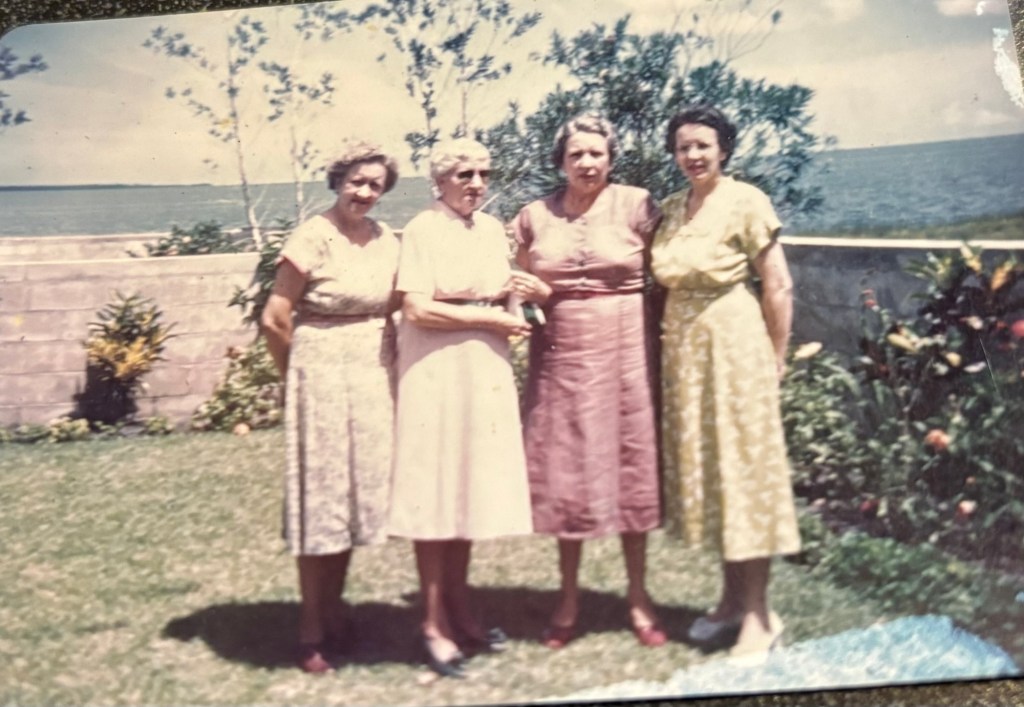
All of this reflection has continued to transform Elizabeth and Erick from names on a tree to real humans living life in connection with family.
I also was surprised to see a pattern emerge. My mom was 39, nearly 40 when I was born. As I studied the little information I have for Elizabeth, I realized she was 39 when her daughter, Grandma Lou, was born. At the time of my birth, it was unusual enough for a woman to have a baby at nearly 40. How much more unusual in the 1870s. Now it feels more like a generational pattern to me. Sometimes family connections appear in unexpected ways.
All of this reflection began with a single date on a family tree. Now I’m curious to learn more about Elizabeth and Erick. I don’t know if I’ll find more, but I’m inspired to search. At the very least, I now feel closer to the people who, till now, were just names and dates.
This discovery has made me aware that behind every name on a family tree is a person who was connected in life to others. We can look at each generation as people who interacted in daily life with the generations right before them, until we’ve traced those connections back to people we have known well and lived our life with. As we look at those connections in a more personal way, those names become real people, and our sense of belonging and appreciation grows.
If your family tree doesn’t have as much detail as you’d like, that’s okay. Sometimes all it takes is one small discovery to bring the past to life and make it feel real today.

